Biogas
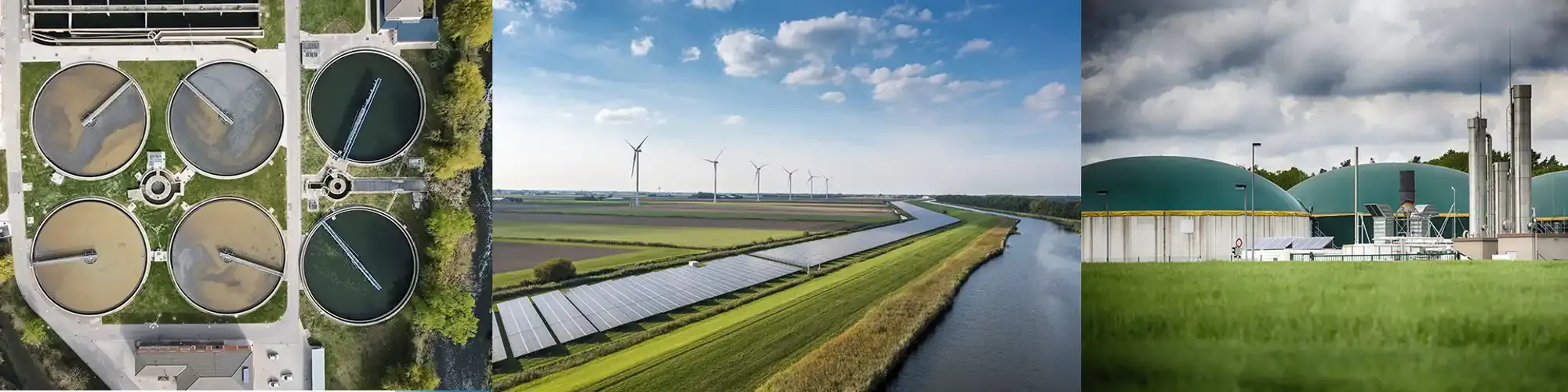
The biomass produced in activated sludge tanks and clarifying tanks is stabilized in the digestion tower and used to produce biogas. A thorough mixing of the sludge increases the gas yield and reduces its retention time in the reactor. In the process, the gas is withdrawn from the upper part of the digestion tower, compressed in the compressor and reintroduced through the nozzles at the bottom.
Fish and pond aeration
The water's oxygen content can be substantially increased using gas ring blowers or liquid ring pumps, which in turn increases the number of fish that can be kept in a pond twofold or even threefold. In this process air is drawn from the atmosphere and forced through an inlet into the tube aerator. It is then diffused into the water through tiny openings and rises in fine bubbles.
The oxygen in the water causes the fish to grow and multiply more rapidly and significantly increases the yield.
Fishfarming
In fish farming pneumatic conveying systems are used to feed the fish. These pellets are susceptible to damage and valuable feed can be lost during pneumatic conveying of feed pellets from the feed barge to the sea cages. Using variable speed drive side channel blowers avoid this complication while at the same time taking up only a quarter of the space needed for other technologies. Minimum maintenance and very low noise and vibration levels are further key features.
Landfill site
The digestion of covered garbage under exclusion of oxygen produces landfill gas. The gas is collected in collection systems, removed from the landfill and compressed by gas compressors or gas blowers. The gas can be used as heating fuel, transformed into electricity or used as liquefied gas.