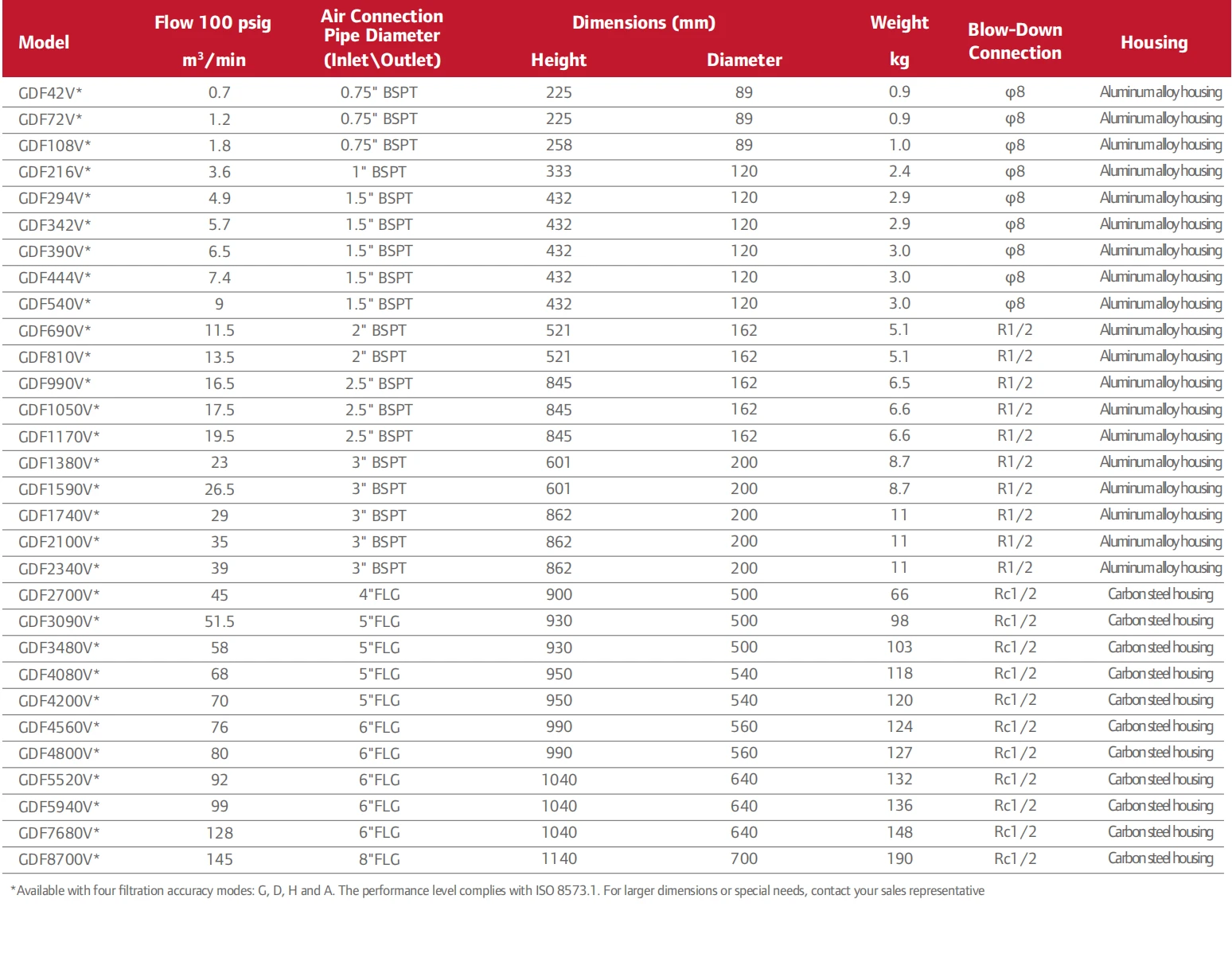
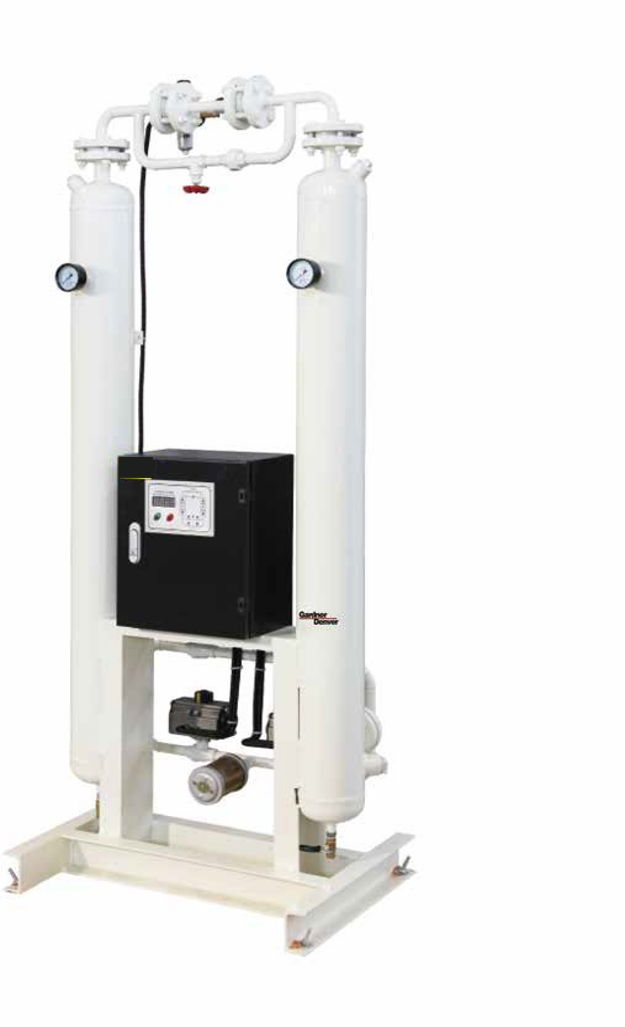
Adsorption dryer features:
- With high-efficiency active adsorbent, strong adsorption capacity and long service life
- The unique cylinder structure design can preserve 98% of the adsorption heat, improve the absorption capacity, make the regeneration more thorough and excellent airflow distribution design, so that the gas can pass through the adsorption layer evenly and avoid the occurrence of cavities
- High-quality pneumatic changeover valve with sensitive action and reliable performance
Adsorption dryers are divided into two types: non-heat and micro-heat according to the process technology. The basic difference between the two process technologies is the way the water is removed from the desiccant, that is, the way the sorbent is regenerated. The choice of adsorption dryer technology depends on different factors, such as the requirements of the system's compressed air flow and quality, as well as the lifetime cost.
Heat-free dryer
This process technology regenerates the sorbent by introducing a portion of dry compressed air. The compressed air after absorbing water is discharged through the muffler. These dryers require partially dried compressed air to be diverted from the system for desiccant regeneration, which is relatively expensive to run but does not require an external power supply, so the initial investment is low.
Microthermal adsorption dryer
It works like a heat-free regenerative dryer, but the compressed air from the system passes through a high-efficiency external heater before entering the regeneration tower to regenerate the desiccant, so that the heated compressed air can absorb more moisture. This type of dryer has a relative initial investment cost with the addition of heaters and related components